

Yes, you read that right.
SHYTS.
And before your imagination goes somewhere unfortunate, let me explain.
SHYTS stands for Shake, Hum, Yawn, Touch, and Smile. It’s an amazingly effective, five-minute vagal rebalancing technique I learned from Sat Devbir. Sat is a spiritual guide for sensitive souls, focused on ways to fully embody your spirituality. And that is best achieved when you are calm and feeling good. I have to tell you, practicing this left me feeling uplifted, laughing, and like a delighted little kid. Which, frankly, was exactly what I needed.
Here’s the science behind why it works.
Your Nervous System Has Two Modes
Most of us who are sensitive, empathetic, or highly attuned spend a lot of time in what’s called the Sympathetic Nervous System: the fight, flight, or freeze response. This is your body’s alarm system. It’s brilliantly designed for genuine emergencies. But for sensitive people, it tends to fire constantly, triggered by other people’s emotions, difficult conversations, overwhelming environments, or simply the accumulated stress of feeling everything so deeply.
When we are in the Parasympathetic Nervous System, we are in the exact opposite state, sometimes called “tend and befriend.” This is where your body rests, repairs, digests, and truly relaxes. It’s where creativity lives. Where good decisions are made. Where you actually feel like yourself.
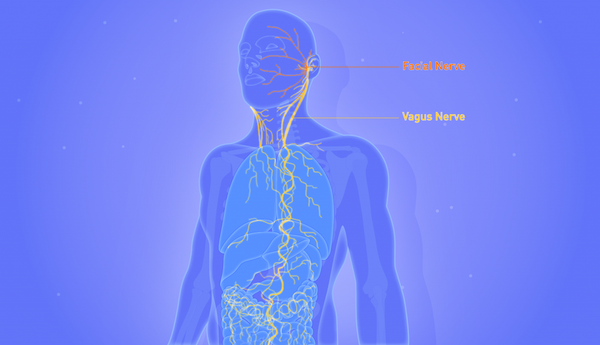
The Parasympathetic nervous system is governed by the Vagus nerve, the longest cranial nerve in the body, which runs from the brainstem to the abdomen. According to Kevin Tracy, MD, “It connects to all the organs in your chest and abdomen that you never think about but are critical to your survival: your heart, lungs, liver, spleen and all the organs involved in your gastrointestinal system, among many others.”
SHYTS is essentially a fast, fun, and completely free way to reactivate the Vagus nerve so you can return to a calm, rest-and-digest state.
It’s important to do the five steps in order. Shaking discharges energy produced in the sympathetic nervous system, and the next four steps bring the Vagus nerve back to neutral so you can relax.
The Five Steps of SHYTS
S — Shake
Stand up and shake your whole body. Arms, legs, head, everything. Don’t be dignified about it.
This isn’t arbitrary; it’s deeply biological. Sat pointed out that in the animal kingdom, this is exactly what a gazelle does after being chased by a lion. Once the threat passes, the animal shakes its whole body to release the tension stored in its nervous system, then returns to grazing as if nothing had happened. Humans have largely lost this instinct, but the capacity remains. Sixty seconds of full-body shaking will discharge whatever your nervous system has been holding.
H — Hum
Any hum will do, but I found that a low, deep, rumbling hum worked best for me. It made my lips vibrate, and the little kid in me absolutely loved it.
The science behind it: because the vagus nerve runs near the vocal cords, humming directly activates it through vibration. It’s one of the simplest and most effective ways to shift your nervous system state — and it’s been used in various forms across spiritual traditions for centuries.
Y — Yawn
A long, exaggerated, unashamed yawn. The kind you might normally try to hide.
Yawning is a well-documented signal to the nervous system that a period of alertness or threat is ending. It’s your body’s way of saying, “That’s over now.” We can soften. Let the jaw drop, let it be as big and dramatic as it wants to be.
T — Touch
With the lightest possible touch, as if brushing your skin with a feather, gently stroke your face, neck, and ears.
This step is especially important for empaths and sensitive people who tend to dissociate when overwhelmed. A light, gentle touch to the face, neck, and ears sends an immediate signal of safety to the nervous system, helping you return to your body. It feels surprisingly good, like being gently and kindly reminded that you exist and you’re safe.
S — Smile
Finally, smile. Consciously, deliberately, even if nothing is particularly funny right now.
The brain doesn’t fully distinguish between a genuine smile and an intentional one. Either way, a smile sends a neurological signal that all is well. Combined with everything that came before, this final step lands differently than a smile at the beginning would. By this point, something has already shifted, and the smile both acknowledges and deepens that shift.
Five minutes. That’s all.
When I finished, I laughed because something inside had genuinely let go. I felt lighter. More present. More like myself. I had that little-kid feeling, spontaneous, unguarded, just alive, which is not something I experience often enough.
And that’s the point. This isn’t a serious practice that requires perfect conditions, quiet rooms, or spiritual preparation. It’s something you can do before a difficult meeting, in your bathroom before a hard conversation, or in your kitchen when the day has become too much.
The Honest Catch
The hardest part, and Sat acknowledged this, is remembering to use it when you need it most.
When you’re overwhelmed, anxious, or in a bad mood, the last thing your nervous system wants to do is shake and hum and yawn. It wants to contract, not expand.
So the practice of SHYTS is really two practices: learning the technique and then building the habit of practicing it precisely when life feels hardest. Start by trying it now, when you’re not in crisis. Let your nervous system learn what the reset feels like so it becomes a familiar resource rather than a foreign idea when things get hard.
And if you want to explore Sat Devbir’s broader work with sensitive souls, you can find him at satdevbir.com. He’s grounded, generous, and genuinely gifted.
If you recognize yourself in this essay and would like a guide to help you along your journey to reclaiming your joy and freedom, I invite you to fill out my intake form.